|
Social Inclusion
Among the innovations of the new
Federal Labor Government, under the leadership of Prime Minister Kevin
Rudd, was the appointment of a Parliamentary Secretary for Social
Inclusion, Senator Ursula Stephens. The concept is important to our
Government and we may expect to hear a lot about it in the next few years
but most Australians have never heard the term. What is social inclusion
and why is it important to Christians?
The meaning of social inclusion,
or overcoming social exclusion, is multifaceted. Its modern use probably
began in France in the 1970s when those who slipped through the social
security net were called (socially) excluded. Conservative governments
took up the term to describe efforts to reduce poverty without having to
admit its existence; however, social inclusion is a much richer term than
poverty reduction. For example, while poverty is a very widespread cause
of inability to participate in society, it may be a symptom of social
exclusion rather than the underlying cause which, for example, could be
the inability to participate fully in the labour market due to poor
English skills. The use of the term ‘social inclusion’ encourages
attention on the causes of exclusion and encourages interest in the
interaction of the various causes.
In both the Old and the New
Testaments, social inclusion is an important attribute of an ethical
society. At the heart of Old Testament law was the principle that God was
specially concerned with the disadvantaged and vulnerable: the socially
excluded. For example, Deuteronomy 10:18 says to the Israelites, the Lord
your God “executes justice for the orphan and the widow and shows his love
for the alien by giving him food and clothing’. When Jesus outlined his
messianic mission in Chapter 4 of Luke’s gospel, he used quotations from
the prophet Isaiah about what the Messiah would do. These were acts to
include the socially excluded.
It is
natural, therefore, that the CES is running forums on social inclusion.
Author: Professor John
Nevile
(Additional information)
The
2008 Series on Social inclusion
Forum
1: The Biblical imperative for social justice and the practical
implications of this
Media release
This forum was held on the 28th August 2008.
Michael Fallon spoke on the Biblical imperative for social justice
followed by Terry McCarthy speaking on the practical implications of this
for Australia.
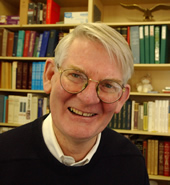
Father Michael Fallon is a Missionary of the Sacred
Heart (MSC). He has a Licentiate in Sacred Scripture (LSS) from the
Pontifical Biblical Institute, Rome. He has been involved in Adult
Education since his ordination in 1961 and is at present working in
Canberra. Michael is currently Parish Priest at
St John's Parish Kippax,
ACT.
Michael has lectured widely throughout Australia, and also in Papua New
Guinea, New Zealand and for a brief period in Israel. His lectures, as
well as his many books and audio recordings, continue to make a
significant contribution to adult biblical literacy.
His
many publications include: Fundamentalism: a misunderstanding of religious
experience; New Testament Letters, Vol. 1: An Introductory Commentary on
the Letters of Paul, and Vol. 2: James, Peter, John, Jude and Hebrews;
and other introductory commentaries on the New Testament. Later this year
his new books on the Pentateuch will be published.
Additional information can be obtained from Michael's
website.
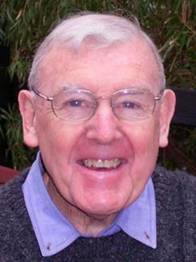
Terry
McCarthy left school teaching in 1965 to join the Australian Public
Service in Canberra. He spent the last 25 years of his public
service as a career diplomat . He served in a number of posts both in
Australia and abroad including Pakistan and Afghanistan, The Hague,
Chicago (Consul General), Sydney (Regional Director), Dublin and The Holy
See (Ambassador).
Terry has been an unpaid volunteer with The Society of St Vincent
de
Paul (Vinnies) for many years. In 1997, following his retirement from
paid employment, he was asked by the then National President of Vinnies
(John Moore) to create and then chair the National Social Justice
Committee of the Society. He continued in that role until 2005/6. For
those 10 years he advocated vigorously for social equity and fairness for
the poor and marginalised.
He led the Vinnies team in a number of important inquiries, including
those on the GST, Treatment of Refugees, Welfare Reform and The Senate
Poverty Inquiry, to name a few. He has delivered many speeches on the
Christian obligation to pursue social justice in his role for Vinnies and
has given many interviews in both the print and electronic media.
He was co-author of “Two
Australias: Addressing Poverty and Equity in Australia”.
The audio recordings for this forum are now available from our
download page. Speaking notes and Powerpoint
slides used can also be downloaded.
Top of Page
Forum
2: Federal
Policy on Social Inclusion
This forum was held on the 5th November 2008 and was
chaired by Fr Michael Fallon msc.
Speakers:
Ursula Stephens spoke about the federal government's social
inclusion policies.
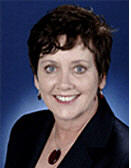
Senator the Hon Ursula Stephens, Senator for New South Wales
Parliamentary Secretary for Social Inclusion and the Voluntary Sector
Parliamentary Secretary Assisting the Prime Minister for Social Inclusion
Prior to her election to the Senate in 2002, Ursula Stephens worked as a
teacher. She went on to operate a small business and then worked in the
NSW Premier's Dept. She has been a Member of the ALP National Executive
and of Labor Women's Network National Executive and was the President, ALP
(NSW) from October 2002.
More details.
On the 18th April, the minister gave a speech at the Blacktown Community
Centre on "Towards
a Social Inclusion agenda for Australia: making it a reality together"
More details about the government's
social inclusion policy
Kasy Chambers spoke on social inclusion from the view point of the
non-government sector

Kasy Chambers
Executive Director of Anglicare Australia.
Anglicare Australia is the peak body for a national network of locally
based Anglican care organisations serving the needs of disadvantaged
Australians and their communities.
New Report shows Social Inclusion Antidote to Turbulent Times.
Kasy Chambers has recently spoken out
on the alarming lack of affordable rental housing and on impacts of
climate change on vulnerable sectors of the community.
Kasy has worked in the non-profit sector in Britain and Australia. She has
been involved in the social welfare sector nationally and in the ACT and
WA. She has an MBA from University of Western Australia and has been the
CEO of two organisations as well as sitting on the boards of many
organisations including some national ones. She has also studied
environmental ethics and has a passion for balancing social justice with
environmental sustainability.
The audio recordings for this forum are now available from our
download page.
Top of Page
The
2009 Series on Social Inclusion
Forum
3:
"White Man's Dreaming: the NT Intervention"
This forum was held on 23 February 2009
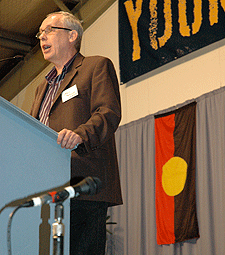
Greg Thompson, Anglican Bishop of the Northern Territory and former Rector of St
John's Anglican Church Reid discussed government efforts to effect change in the NT and the
dilemmas faced. He highlighted a marginalization of the Indigenous
church and a denial of the spiritual in local community solutions. "The Australian Church can no longer remain an audience to government
policy or to the suffering of its own marginalized people. It must engage
Indigenous Australia with at least the same commitment and research it
places upon church growth and renewal – its spiritual health and good
conscience depends on it."
More details
Forum 4: (our 1st forum on Mental Health)
"Access to Mental
Health Care: There're people to help you out but not many to stop you
falling in."
This forum was held on 30 April 2009
Speakers:
David
Crosbie, Chief Executive Officer, Mental Health Council of Australia

As CEO of the Mental Health
Council of Australia, Mr Crosbie leads a peak national organisation that
is driving mental health reform across Australia and actively advocating
the interests of a broad range of members and stakeholders including
professional groups, consumers, carers and service providers.
Kat Szukalska, Coordinator CYCLOPSACT, Litmus Program of Anglicare
Canberra and Goulburn & Youth in the City.
Litmus Program:
Litmus supports young carers looking after a
parent, parents with a mental illness and other family members. It
understands that mental illness can impact all members of a family by
offering tailored case management for both individuals and families as a
whole.
More details
Forum 5: (our 2nd forum on Mental Health)
"Mental disorder
plus addiction: I can't fit in anywhere"
(dual
diagnosis, the co-existence of a mental health problem with some form of
substance use)
This forum was held on 3 June 2009
Speakers:
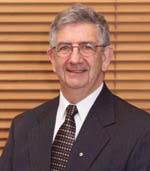 Professor
Ian Webster AO, is a physician and Emeritus Professor of Public Health
and Community Medicine of the University of New South Wales and Patron of
the Alcohol and other Drugs Council of Australia. He has held senior
appointments in the Faculty of Medicine at the University of New South
Wales and appointments at Monash, Sheffield and Sydney Universities. Professor
Ian Webster AO, is a physician and Emeritus Professor of Public Health
and Community Medicine of the University of New South Wales and Patron of
the Alcohol and other Drugs Council of Australia. He has held senior
appointments in the Faculty of Medicine at the University of New South
Wales and appointments at Monash, Sheffield and Sydney Universities.
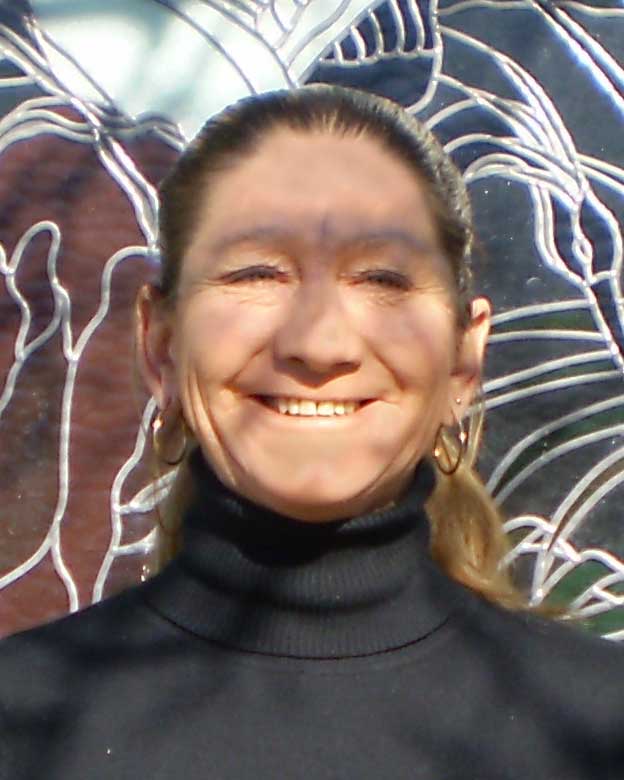
Deb Wybron, Convenor, ACT Women and Prison Group
From a very young age Deb Wybron used alcohol and drugs to numb her pain,
which led her to be
institutionalized as one of the 'Forgotten Australians'. Years on, an ACT
women's service and many other
women within the Community Sector of ACT supported Deb through her mental
health, drug and alcohol
issues. In this time Deb has achieved an Advanced Diploma in Community
Development, a Diploma in
Alcohol and Other Drugs and moved on to finalize a Bachelors Degree in
Social Work.
More details
Forum 6: "The
social inclusion agenda: What does it mean for poverty in Australia?"
This forum was held on 14 October 2009
Speaker: Julian Disney
"The
global financial crisis is greatly increasing poverty and hardship in
Australia. Its greatest victims, especially those without work,
will continue to suffer long after the financial markets have recovered
and the crisis has been declared over. Many Australian governments and
community organisations have adopted the European concept of "social
inclusion" as a policy theme. Will it help to promote hard-headed
attention on those in greatest hardship and on underlying causes in areas
like employment, income, housing and transport ? Or will there be a softer
focus, concentrating more on alleviating symptoms and on the less deeply
disadvantaged?"
Professor
Julian Disney is Chair of the National Affordable Housing Summit and
National Chair of Anti-Poverty Week. He is also Convenor of the Community
Tax Project and of the Neighbours Program, which works to strengthen
engagement between community leaders in Australia and neighbouring Asian
countries.
He has previously been Coordinator of the Sydney Welfare Rights Centre
where he worked for six years assisting people who were unemployed or
experiencing other forms of hardship. He has also been President of the
NSW Council of Social Service (NCOSS) and the Australian Council of Social
Service (ACOSS). He has been World President of the International Council
on Social Welfare (ICSW) which represents social welfare organisations
from more than 80 countries.
Professor Disney has been a full-time NSW Law Reform Commissioner and
Chair of the NSW Ministerial Task Force on Affordable Housing. He was a
member for seven years of the Australian Government’s Economic Planning
Advisory Council (EPAC) and has been chair or member of national advisory
committees in fields such as education, employment and training, social
security, public administration, literacy, housing, superannuation and
immigration.
During the last two decades he has been a policy consultant to a number of
social welfare and business groups, a regular speaker at national and
international conferences, and a frequent media commentator. He has also
been the principal author or editor of books and articles relating to
aspects of the legal profession, taxation, housing, social welfare,
governance, national development and international organisations.
In 1994, Julian Disney was appointed an Officer of the Order of Australia
(AO) for services to the development of economic and social welfare
policy, and to the law. In 1999, he was awarded an Honorary Doctorate of
Laws (LL.D) by the University of New South Wales.
His research Interests include: Global governance, Regionalism, Public
investment and taxation, Access to justice, Social security and
unemployment, Urban and regional development, Taxation.
Audio downloads from
this forum are not currently available
Top of Page |
