|
|
Prison Forums Information/Resource Page
[Home] [About Us] [CES Forums] [Non CES Events] [Social Justice] [Downloads] [Site Map] |
|
Google Search Facility
Additional Site Navigation
Bookmarks for this Page
UN Resolution access injection drug users
Reference information on Corrections
UN Resolution access injection drug users
Reference information on Corrections
UN Resolution access injection drug users
Reference information on Corrections
UN Resolution access injection drug users
Reference information on Corrections
Date page last updated 02-Mar-2011
|
The CES 2008 Series of Prison Forums In the first half of
2008, Christians for an Ethical Society held three
forums on prisons.
This was in response to the anticipated opening in 2008 of the first prison in the
Australian Capital Territory (A.C.T.). After some delays the new ACT
prison was finally opened early 2009. The establishment of this prison within the Canberra community is a development that for three reasons Christians cannot ignore: concern for the outcast, justice to the disadvantaged and the need for healing for the victim and the community. Additional information on Christian Ethics and Prisons.
Who was
Alexander Maconochie? A frustrated Magistrate in Canberra (Grant Lalor) has recently stated publicly (Canberra Times) that Governments were expecting the Courts to do the work of the Mental Health Service. Have a look at what is being done in Memphis TN USA.
The UK Justice Committee which is appointed by the House of Commons to examine policy has signaled a reversal of sentencing policy - view report. (dated 14 Jan 2010)
In May 2009, the Women's Centre for Health Matters, published the report "ACT Women and Prisons, Invisible Bars: The Stories behind the Stats" written by Deb Wybron and Kiri Dicker. The report is available for viewing/downloading. It was launched by the ACT Minister for Women, Katy Gallagher. An MP3 recording of the launch can be listened to/downloaded here.
United Nations Economic and Social Council on access by injecting drug users
The
United Nations Economic and Social Council passed a most important
resolution at its recent session in July on access by injecting drugs
users, whether in or outside prison, to a comprehensive package of
measures to combat HIV and other blood borne diseases. This resolution and
the endorsed
Technical Guide has direct application to Australian prisons and thus
to the AMC. Paragraph 19 of the resolution reads: Cigarette smoking ban. The ACT government is considering introducing cigarette smoking restriction when the new prison opens. You may wish to read some recent articles and correspondence published in the Canberra Time.
Strip Searches (August 2008) - In the last sitting week before the election, the Government hurried legislation through the Legislative Assembly to expand the power to strip search detainees in the ACT. For more information, including suggestions as to what you can do, visit the ACT Community Coalition on Corrections website.
Letters to the editor of The Canberra Times: "Jail with no drugs or no rights?" "Strip-searching prisoner legislation undermines goals"
During the debate in the assembly, Deb Foskey, retiring Greens member for Molonglo, had this to say: (some extracts)
"What does a strip search involve? A university study describes it thus:
The Human Rights Commission describes the process in the ACT as being very similar, except that the detainee will be half-clothed. I doubt that that will make the experience much less humiliating, traumatic or disempowering. This is what the Assembly is now being asked to authorise where a corrections officer considers that it is prudent. In reality, corrections officers will treat this power as reinstating their power to order routine strip searches. And how often is it likely to be prudent? According to the Canberra Times, the Human Rights Commission reports that ACT detainees are subjected to numerous strip searches. If regularly visited, for example, it would be possible that a detainee could be subjected to 10 strip searches a week. Five visits in one week would involve 10 strip searches, one before each visit and one afterwards. Three visits in one week, a court attendance and a cell search would involve nine strip searches. Detainees who were receiving regular visits from family members said they were strip-searched several times each week. Prisoners at high risk of self-harm are to be strip-searched every night before they are locked in their cell. Taking of urine samples for drug testing, which occurs on a routine, random and compulsory basis, involves further stripping. The detainee is strip-searched and then has to urinate in the presence of two officers."
"Anna Bogdanic, of Monash University, reports that over a four-year period there were 41,728 strip searches at the Brisbane Women’s Correctional Centre. This led to only two discoveries of illicit drugs. Over a 27-month period, 35,288 searches at the Dame Phyllis Frost Centre in Victoria produced only 20 items of unspecified contraband. Bogdanic observes that, in spite of that intense effort, the presence of illicit drug use is still significantly high in both Queensland and Victorian women’s prisons."
"Strip searching is bad enough for men, but for women its impacts are extreme. Many experience it as rape, particularly those who have suffered sexual abuse. A Queensland survey revealed:
"For many women, being
strip-searched is similar to a state-sanctioned sexual assault. Some
symptoms of being strip-searched include feelings of anger, depression,
anxiety and self-blame. Flashbacks and nightmares are not uncommon. Sexual
dysfunctions are a common response in victims of rape. Women who are
strip-searched often experience the same. For these women the trauma of
strip searching induces in them feelings of disgust towards their own
bodies. Perhaps it is meant to.
The emotions of women
who are raped are often directed inwards and lead to depression and
self-harm. For some women, strip searching makes it more likely that they
will self-harm or even commit suicide. Most women detainees are not
security risks. Are the negative dimensions of routine strip searching in
pursuit of a flawed drugs policy worth the costs? These provisions will
lead to greater sharing of syringes and greater transmission of
blood-borne diseases.
We need to ask if we are
meeting our duty of care to these women, who are as much our constituents
as the burghers of O’Malley and Red Hill. In my opinion, the answer is no;
we are failing them yet again. A Queensland inquiry found that a significant number of women elected not to have contact visits from family and friends, mainly because they knew that they would have to be strip-searched afterwards. Not surprisingly, families and friends think twice about visiting detainees, and are traumatised when they realise the consequences for the person they visit. It makes a bit of a mockery of the government’s claim that prisoners will have greater accessibility to and interaction with family and other supports to assist in their rehabilitation and to maintain family unity.
The full debate can be accessed on page 3815 of Hansard for the ACT Legislative Assembly. Remember to visit the ACT Community Coalition on Corrections website for more information. Audio downloads will also be available shortly from that site of a public forum regarding strip searching.
Interview with Deb Wybron, Convener ACT Women and Prisons Group Deb Wybron spoke to the CES in early May 2008.
Reference information on Corrections This page contains an assortment of reference information on Prisons
What can you do to help?
A small group of CES supporters meet about once a month to keep a 'watching brief' on the operation of the AMC and to ensure that the implemented operational policy reflects the various aspirations and pronouncements made prior to its opening. They also discuss various ways in which CES supporters can become further involved. If you would like to join this group please email the group convener.
Forum
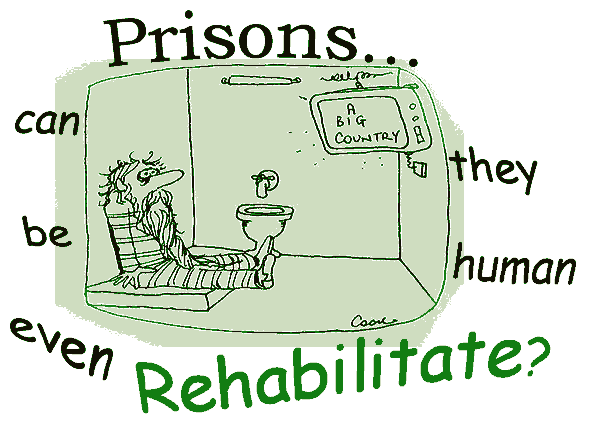
1: "Prisons - Can they be Human - Can they even Rehabilitate"?
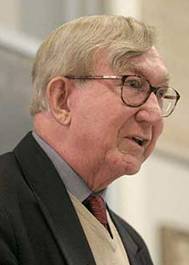
Professor Tony Vinson AM
Summary A full transcript of Professor Vinson's speech and handouts he provided are available. An audio recording of proceedings (including Questions and Answers from the floor) and a PDF version of the speech are available to listen to or download from our download page. View the Media Release here. Forum 2: Part A - "The new ACT prison - How the ACT compares" 19 March
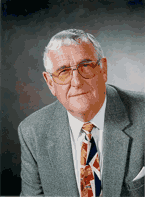
2008 Professor David Biles OAM "How the ACT compares - facts and figures in Australia"
Professor Biles is an internationally-renowned criminologist.
He has been Deputy Director of the Australian Institute of Criminology in
Canberra, head of research in the Royal Commission into Aboriginal Deaths
in Custody and Senior Lecturer in Criminology at the University of
Melbourne. He has also worked as an educational officer in four different
prisons in Victoria over eleven years. Recently, he has worked as a
full-time consultant for the United Nations, AusAid, Australasian
Correctional Management Pty Ltd and for the Victorian, the New South Wales
and the ACT governments. He is Professorial Associate in Corrections of
Charles Sturt University for whom he teaches courses in correctional
management. Summary
A full transcript of Professor Biles' speech is available. An audio recording of proceedings (including Questions and Answers from the floor) and a PDF version of the speech are available to listen to or download from our download page. View the Media Release here.
Forum 2: Part B - "The new ACT prison: what is planned and what it will achieve"
Simon Corbell has been the Australian Labor Party Member for
the seat of Molonglo
since 1997 and has been a Minister in the Stanhope Labor Government since
its election in 2001. He is currently Attorney General, which includes
Corrections, and Minister for Police and Emergency Services, as well as
Manager of Government Business. Mr Corbell is responsible for the
establishment of the Alexander Maconochie Centre, the ACT's first prison.
He established the ACT Human Rights Commission and, at different times,
has been Minister with responsibility for the portfolios of Health,
Planning and Land Management, the Environment, Communications and
Information Technology, Youth Affairs and Public Administration as well as
Education and Community Services.
Summary
A full transcript of
Simon Corbell's speech is available.
An audio recording of proceedings (including Questions and Answers from
the floor) including a PDF version of the speech are available
to listen to or download from our download page.
Return to Page Bookmarks
Australian
Liberal Party
Senator for the ACT, Co-chair of the Senate Select Committee into Mental
Health, Minister responsible for corrections in previous Liberal Governments of the
ACT.
A full transcript of Senator Gary Humphries speech
is available. An audio recording of proceedings (including Questions and
Answers from the floor) including a PDF version of the speech are available
to listen to or download from our download page.
Justice Richard Refshauge A full transcript of Justice Richard
Refshauge's speech is available. An audio recording of proceedings
(including Questions and Answers from the floor) including a PDF version
of the speech are available
to listen to or download from our download page. A full transcript of Ron Cahill's speech is available. An audio recording of proceedings (including Questions and Answers from the floor) including a PDF version of the speech are available to listen to or download from our download page.
|