Watch Stephen Pickard’s interview with Toni Hassan on the topic of “Screen Addiction and the Next Generation”. This is the July edition of the new online forum series.

Watch Stephen Pickard’s interview with Toni Hassan on the topic of “Screen Addiction and the Next Generation”. This is the July edition of the new online forum series.
Jill Sutton, CES
Dear CES readers and especially those responsible for homilies or sermons in the month of May,
Most of us will have read Kasy Chambers’ excellent letter on this site. And, as Christians for an Ethical Society, many of us will join her in proclaiming that we certainly do not want our nation to revert ‘back to normal’ after seeing so much admirable change in social policy. We are inspired with developments like the doubling of Newstart, moves to accommodate the homeless in safer places like hotels, the opening of private hospitals to more community access, additional leave entitlements, more equitable Job-Keeper payments to keep us attached to our jobs and the moratorium on evictions from private rental. As Kasy says, we don’t want to revert to a nation which has a two-class workforce, no housing security for renters, denial of the culture and custodianship of our First Nations Peoples, abuse of our planet’s resources causing climate change and species extinction and our shameful stewardship of this country which is related to drought and bushfires.
At this point in Australia’s history, it seems vital to me that, as Christians, we look at what we can do and how we can sustain the good policy changes we have seen in response to COVID-19. Very helpfully. Meredith Lake has pointed out, in her recent book about the history of the Bible in Australia, the way the social justice themes in our sacred texts have had a profound influence on the course of our social policy in the past. The question for all of us now is, ‘How can we follow up that tradition at this new turning point in our national history?’
Now of course I don’t hold myself as any kind of expert but I have drafted a good few sermons in my time and have regularly attended Pitt Street Uniting Church in Sydney, St Carthage’s Roman Catholic Church in Melbourne, St Ninians Uniting Church in Lyneham and the Quakers in Turner, when I have lived in proximity to these communities. They have each nourished me wonderfully in their own way. Studying theology and backgrounding Rev Tim Costello for a few years has also made me aware of the power of a good homily or sermon so I have taken a look at the lectionary for May, and will now jot down a few thoughts I have about how our texts might help us to retain the visionary social policy changes which we imagine and ask for most Sundays in the Lord’s Prayer. When we pray, ‘Thy kingdom come’ we know that we want to sustain those developments which Kasy lists as ‘impressive’.
For the first Sunday in May (3 May) we have Paul in Acts 2:44-45, telling us that ‘All who believed together and had all things in common, They would sell their possessions and goods and distribute the proceeds to all, as any had need’ and our most beloved Psalm 23 sharing that ‘the Lord is my shepherd, I shall not want’. This is such beautiful material from which to look at the important work of sharing provided by the doubling of Newstart and the introduction of the equitable job-keeper payment. Thinking of the Lord being everyone’s shepherd is such a powerful reminder of the way some are still missing out as described in the Winnunga piece on our website about the over-representation of indigenous people in prison.
Then on the second Sunday in May (10 May), there is a gift of a well-known passage in John 14. ‘In my Father’s house there are many dwelling places. If it were not so, would I have told you that I go to prepare a place for you’. Of course, this passage is traditionally used when thinking about death but isn’t it demonstrating a recognition from Jesus that safe housing is central to our existence? Isn’t it a sign that ensuring appropriate housing should be a central focus of our social policy, and haven’t we an obligation to cry out with relief and insist that any provision of housing for the homeless in a Canberra winter is an essential part of our Christian obligation?
And then, on the third Sunday (17 May) we have Psalm 66 which has the Israelites calling out for notice and space. We listen to them so shouldn’t we be listening to those who today are similarly oppressed with wage theft, inadequate holidays and insecure employment? We could be encouraged to hear them when we read the Israelites call out, ‘You let people ride over our heads; we went through fire and through water, yet you have brought us out to a spacious place’. Couldn’t we preach about how the current generous policies have brought so many of our oppressed citizens into a more spacious place, and about how it is our duty, as Christians, to sustain them there?
And finally in week 4 (24 May) could we hear, in Psalm 28, verses like number 5 in which we have an inspiring definition of God? We read that ‘Father of orphans, and protector of widows is God in his habitation.’ We as Christians want this protection of the orphan, of the widow, and indeed of all the disadvantaged, and here we learn that this protection is in our very definition of the One we worship.
I know that you are all sensitive to the congregations to whom you have given pastoral care and I am no expert in the manner or matter of what you say. And I know that you must and that you will choose and use texts as the Spirit moves you so please forgive me for writing to you in this way and for presuming to remind you of the rich relevance of our sacred texts. I suppose I have been impressed with the unusual and most fruitful collaboration we have seen between political parties and between state and federal governments and I crave to see the same collaboration between the leaders of our Christian churches.
Respectfully and hopefully,
Jill Sutton (nasturtium2@bigpond.com)
Kasy Chambers, CEO Anglicare Australia
The coronavirus or COVID-19 has laid bare the weaknesses in our society.
The GFC, bushfires, and many other disasters drew upon individual generosity, but did not really change the underlying structure of society. During the GFC, I wrote that I hoped the close fiscal call many experienced, would soften how we responded to those less well off; that more cautious consumption could lead to a more sympathetic environmental footprint. However neither came to be on a large scale; en masse we forgot the shock and busied ourselves again being productive.
This time, the crisis is different. None of us can be truly cushioned. Inter-generational wealth won’t help, neither will being young or fit guarantee immunity from the worst effects. This time the health of every single member of the public rests upon the weakest plank of our society’s structure.
Hence, one by one, we are seeing those horrifically weak planks being addressed. How can we guarantee the public’s health when half of Australian workers don’t have access to paid leave entitlements? When many people live in barely affordable rental properties, how can we avoid a huge increase in the homeless population with deteriorating health for them and those around them? And how could we expect people to stay healthy while living on the lowest unemployment benefit in the OECD.
Federal and State governments have acted and deserve credit for an impressive list: A doubling of the Newstart rate; real action on getting homeless people off the streets as we approach winter; opening private hospitals for community benefit; addressing the precarious nature of people’s employment with one-off payments; additional leave entitlements (for some the only leave entitlements); the massive Job-Keeper payment designed to keep people attached to their jobs; the moratorium on evictions from private rental –
Notwithstanding this list, there are still some left behind – each time the lowest income group is lifted it uncovers new poverty and inequities. At the moment, people living on the Disability Support Pension need urgent consideration as they struggle with increased food prices, and often additional health vulnerabilities. Similarly those on an aged pension without the security of owning their own home will be struggling; carers are another group yet to attract much needed attention in this pandemic. People are still sleeping rough in some jurisdictions, including here in Canberra where the overnight temperature dropped to five degrees on the weekend.
Despite this it is an impressive list of responses and time will tell what additional benefits are gained from each of them – we will certainly be looking for that.
Now, as people start look to the future, there is talk of “getting back to normal”. I am resisting that narrative. What is normal about the precariousness of leaving half a national workforce without any leave entitlements? With a two-class workforce, half the people enjoy career progression, training and leave; while the rest swirl around in a peripheral job churn of casual hours, underemployment and the gig economy. They are not able to access what the first half consider to be societal norms, like the housing market, or even look to a superannuated future in their old age.
What is normative about a housing market that favours wealth development over home and shelter? This is an opportunity to swing the balance of residential tenancy agreements in recognition that people live long term in rental housing, seeking to call it home. This security is denied when “no reason evictions” and short-term leases are commonplace.
How could we intentionally go back to a structure which by its nature excludes Aboriginal and First Nations people, even denying their culture and custodianship. How can we possibly go back to the “normal” of taking 5 or 6 times more than the planet is able to repair. Or to an Australia with a shameful species extinction record. Since European arrival 1,790 species are recorded as being on the brink, and this is before the catastrophic 2019 bushfires. We must not move on too quickly from the dual disasters of prolonged drought and catastrophic bushfires, both direct results of our shameful stewardship of this beautiful continent. The health and well-being of many rural and regional communities were already worn and fragile before COVID-19 arrived.
The list goes on – but it is clear the way we were, is not something to aspire a return. A society that dismisses poverty as individual failure, or treats environmental sustainability as an economic nuisance, is not worthy of membership. Post COVID-19, there is no place for government policies that shift money to the top quintiles of society and reward environmental damage.
With the first part of the response to the pandemic posited to take 6 months we have time to plan, and to imagine. We have long pointed out that a society is what we choose – we are the architects, we are the citizens. The community sector has a particular role to play. We are the first responders in disasters. Our people are on the frontline handing out material aid, advice and often comfort. Our services form a safety net for people in personal disaster – family violence, children unable to remain with their families, homelessness, etc.
But we are also far more than that. The community sector at its best is society at its best. The values of Anglicare Australia and its members support the very relationships that have been identified as central to overcoming the current pandemic and inspire a spirit of volunteerism in others. We are able to look ahead and imagine what life could and should look like. We provide services that are the safety net, but we are also part of the rich and deeply woven fabric of those communities.
We will be working over the next months to both ensure none are left behind in the initial response to this dreadful pandemic, while using our influence to ensure more progressive policies shape the future. We will work hard to not get back to the old normal, but build a future in which economy serves equity and justice, kindness and empathy.

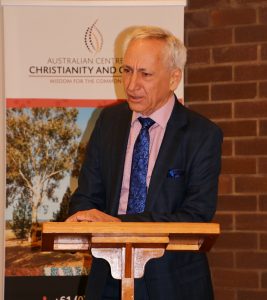
The Hon Dr Ken Crispin QC spoke at the Christians for an Ethical Society forum on 19 February 2020 on the topic ‘Voices and Values in the Public Sphere’. His speech is available to download and read.
Audio files from the event are now available to listen to as well.

Speakers: The Hon. Dr Ken Crispin QC
When: 7.30pm 19 February 2020
Where: Chapel, Australian Centre for Christianity and Culture
During recent decades public attitudes to issues such as divorce, contraception, abortion, drugs, sexuality and gender identity have changed dramatically. Some see such changes as evidence of moral decline whilst others insist that they reflect moral principles such as fairness and respect for others. Intemperate statements and child abuse scandals have led many to dismiss Christians as sanctimonious, if not hypocritical, moralists. Perhaps paradoxically, long-recognised rights and freedoms have been eroded by new laws and unprecedented government secrecy. Whistle blowers are being prosecuted for revealing government misconduct. Faith in democracy is waning. Within this maelstrom of change, we need to reflect upon the values we affirm and the voices we raise.
The Hon Dr Ken Crispin QC is a leading jurist having occupied the position of DPP for the ACT, a Supreme Court Judge, President of the Court of Appeal. He is currently the Commissioner for Standards for the Legislative Assembly. His most recent publication is A Sceptics Guide to Belief.
Download PdfChristians for an Ethical Society in association with the Canberra Alliance of Participatory Democracy (CAPaD) held a forum on 20 November 2019 on the topic “Getting the democracy we want: government with the people”. Audio is now available (see below)
Four CAPad members shareed what the group is doing and learning, ideas for democratic renewal in the ACT and actions we can take as individuals and in our groups and associations.
Beth Slatyer has a background in health policy and system reform and is an Honorary Fellow at the Nossal Institute for Global Health at the University of Melbourne. Through her work with governments and civil society in Australia and overseas she has developed a deep appreciation of how good governance, public interest institutions and accountability underpin equitable and sustainable social and economic systems.
Peter Tait has been a General Practitioner for 38 years, 30 in Aboriginal health in Central Australia. He was the 2007 Royal Australian College of General Practitioners General Practitioner of the Year, and 2017 Public Health Association Australia Sidney Sax medalist. He attained a Masters of Climate Change at the Australian National University (ANU) in 2010. He is a Clinical Senior Lecturer in Population Health at ANU Medical School. Peter believes a person’s health is grounded in a healthy society, and a healthy society in a well-functioning ecosystem.
Sue Ingram has a deep interest in governance building on a professional career as a senior executive in the Australian Government, as a senior member of post-conflict peacebuilding missions in Timor-Leste and Solomon Islands, as principal governance adviser in AusAID and as an international governance consultant. She holds a PhD in political science based on research into the post-conflict political settlements in Timor-Leste and Bougainville and has joined international election observation missions for the last three national elections in Timor-Leste and Bougainville.
Petra Cram has been a Primary school teacher for 25 years, is committed to excellence in education and also cares deeply for the well-being of Earth and its complex living systems. She is passionate about finding participatory and democratic solutions to the problem of the corporate takeover of our and political lives, and is convinced that a cohesion of our diverse civil society groups, will garner the power needed to create a balance between economic, civic and political forces in our society.
Audio files of the night’s proceedings are now available.
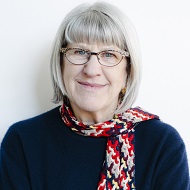
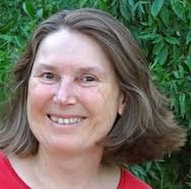
“Getting the Democracy we want: government with the people” in partnership with the Canberra Alliance for Participatory Democracy (CAPaD)
Speakers: Beth Slatyer, Peter Tait, Sue Ingram and Petra Cram.
When: 7.30pm 20 November 2019
Where: Chapel, Australian Centre for Christianity and Culture
People everywhere are questioning what is happening to democracy and how governments could better work with “We, the people”. Some have called the current failures of trust and integrity a “democratic recession”.
CAPaD is a community group committed to making democracy work better, through citizen deliberation and action. CAPaD wants a democratic Canberra — where citizens trust their elected representatives, hold them accountable, engage in decision-making, and defend what sustains the public interest. The ACT is an ideal test bed for exploring how to achieve reform.
The group is actively working in three domains:
Four CAPad members will share what the group is doing and learning, ideas for democratic renewal in the ACT and actions we can take as individuals and in our groups and associations.
Beth Slatyer has a background in health policy and system reform and is an Honorary Fellow at the Nossal Institute for Global Health at the University of Melbourne. Through her work with governments and civil society in Australia and overseas she has developed a deep appreciation of how good governance, public interest institutions and accountability underpin equitable and sustainable social and economic systems.
Peter Tait has been a General Practitioner for 38 years, 30 in Aboriginal health in Central Australia. He was the 2007 Royal Australian College of General Practitioners General Practitioner of the Year, and 2017 Public Health Association Australia Sidney Sax medalist. He attained a Masters of Climate Change at the Australian National University (ANU) in 2010. He is a Clinical Senior Lecturer in Population Health at ANU Medical School. Peter believes a person’s health is grounded in a healthy society, and a healthy society in a well-functioning ecosystem.
Sue Ingram has a deep interest in governance building on a professional career as a senior executive in the Australian Government, as a senior member of post-conflict peacebuilding missions in Timor-Leste and Solomon Islands, as principal governance adviser in AusAID and as an international governance consultant. She holds a PhD in political science based on research into the post-conflict political settlements in Timor-Leste and Bougainville and has joined international election observation missions for the last three national elections in Timor-Leste and Bougainville.
Petra Cram has been a Primary school teacher for 25 years, is committed to excellence in education and also cares deeply for the well-being of Earth and its complex living systems. She is passionate about finding participatory and democratic solutions to the problem of the corporate takeover of our and political lives, and is convinced that a cohesion of our diverse civil society groups, will garner the power needed to create a balance between economic, civic and political forces in our society.
Download Pdf
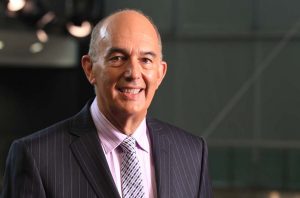
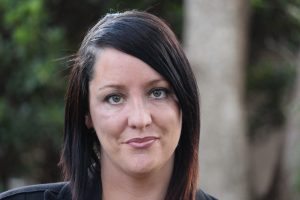
A Joint Forum with the Catholic Social Justice Commission based on their 2019-20 Social Justice Statement
Speakers: Paul Bongiorno AM, Beth Doherty, Huw Warmenhoven and Toni Hassan
When: 7.30pm 16 October 2019
Where: Chapel, Australian Centre for Christianity and Culture
The Australian Catholic Bishops’ Social Justice Statement for 2019 – 2020, Making it Real: Genuine human encounter in our digital world, affirms the positive possibilities for encounter and solidarity offered by new digital media, while warning of those elements of our digital world that may be harmful. These include information overload; social isolation; marginalisation of the vulnerable; consumerism and fake news.
The Statement reminds us that the new digital media cannot be seen as neutral or ‘unaffected by any moral considerations’. While many users do not realise it, the core business of social media platforms is to sell advertising and maximise profits. People’s personal lives may be reduced to data that is traded for profit or power, and it is used to target and influence us in ways previously unthinkable. Pushing users to more extreme positions and promoting fake news and conspiracy theories sells, but this is at odds with human solidarity.
The Statement amplifies Pope Francis’ call to us to ‘boldly become citizens of the digital world’, with the image of the Good Samaritan as our inspiration. We are called not only to love our neighbour, but to bring the love of God to the new global neighbourhood. The Statement points out that we are called not just to be inhabitants of this new digital world, but active citizens shaping it. All of us – whether we are users, communities, industrial or political leaders – have a role to play in rejecting hatred, divisions and falsehoods. We have a duty to foster a neighbourhood that promotes those human attributes and social values that lend themselves to genuine human encounter – love, understanding, beauty, goodness, truth and trustworthiness, joy and hope.
Paul Bongiorno is a veteran political journalist. He writes weekly columns for The Saturday Paper, The New Daily and other publications as well being a regular commentator on ABC Radio. He is also a contributing editor to Network Ten. He has been a journalist for 45 years and in that time has won four national Walkley Awards for journalistic excellence.
Beth Doherty is a journalist and educator who currently works as a religious education teacher at St Clare’s College, Canberra. She is the author of Tweet others as you would wish to be tweeted: A scripture-based guide to social media for the Church, published by David Lovell in 2015 under the auspices of the Australian Catholic Bishops Conference.
Huw Warmenhoven is the Youth Coordinator in the Archdiocese of Canberra and Goulburn. He has worked over the past 7 years in developing Youth Ministry in Catholic school across Australia, Europe, Africa and the Pacific. He has a passion for communicating the timeless Gospel in our time, inviting young people into the mission of the Church and responding through faith to contemporary social justice challenges.
Toni Hassan is an adjunct research scholar with The Australian Centre for Christianity and Culture, Charles Sturt University. She is an emerging artist, journalist and author of Families in the Digital Age: Every parent’s guide (Hypbrid, 2019).
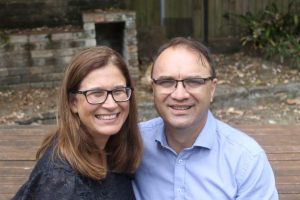
Speaker: Bishop Mark and Monica Short
When: 6 for 6:30 Tuesday 27 August 2019
Where: Bella Vista Restaurant, 84 Emu Bank, Belconnen
At our August Dinner forum, Bishop Mark and Monica Short will address the topic “Telling Truth, Building Community: What the Indigenous Church Teaches Us”.
Mark and Monica Short returned to Canberra in 2019. Mark serves as Bishop of the Anglican Diocese of Canberra and Goulburn and Monica is a Lecturer and social researcher in Social Work with Charles Sturt University. For the previous seven and a half years they lived in Sydney but were actively engaged with rural and regional Australia. For Mark this came through his role as National Director of The Bush Church Aid Society and for Monica through a series of research projects looking at the interface between the rural Anglican Church and people from culturally and linguistically diverse backgrounds, people living with a disability and Aboriginal peoples. In both those roles Indigenous Christian leaders have been generous companions and guides and we will draw on their insights in this talk.
Cost: $60 per person for a three-course meal with wine, juice & tea/coffee
To book: Transfer to “Christians for an Ethical Society” BSB 805-022 acc’t 03310199 reference with “your surname Dinner” and also email booking details to admin@ces.org.au
Or
Send cheque made out to “Christians for an Ethical Society” to 15 Blackall St, Barton ACT 2600. Bookings close 6 August 2019.