LIVING RESPONSIBLY IN OUR SOCIETY

By | Past Forums

Wednesday 23 November 2022

How we respond to issues concerning the environment and climate change is significantly shaped by our beliefs, world view and philosophy of life. Lynn White in 1967 stated that the Genesis story which gave “dominion” over all creation had been interpreted to mean the natural world exists “ explicitly for man’s (sic) benefit and rule and that nothing in the physical world exists for a purpose other than for human purposes.”

Fifty five years later we read these words with shame. Dominion never meant exploitation and desecration. We were in fact to act as responsible stewards of creation and respect its beauty, fragility and purpose.

Our last Forum for the year looked at how we live responsibly in the world. The Greens have reshaped our thinking on the environment. Jo Clay spoke on her own philosophy and values with a response from Alison Weeks, who drew on Pope Francis’ writings on the environment and what that means to live responsibly.

ABOUT THE SPEAKERS

Jo Clay MLA
Jo Clay MLA is an ACT Greens member for Ginninderra (Belconnen). Prior to entering politics in 2020, Jo worked on the environmental ethics of everyday living. She set up a recycling company, ran a project to cut the average Australian carbon footprint by 75%, supported school strikers and worked in active transport. Each day, Jo asks herself two questions. What is the right thing to do, now that we are in a climate emergency? And how should we look after future generations?”


Alison Weeks
Alison Weeks, chair of the Catholic Archdiocese Caring for Creation movement and deputy chair of the Catholic Women’s Taskforce, in response will highlight the messages of Laudato Si, the 2015 encyclical of Pope Francis, which calls for a new approach to caring for our common home. In response to the cry of the earth, which is also the cry of the poor, we need to live and act in love, respect and connectedness with all of God’s creation. For Christians, this calls for a fundamental shift from exploitative dominion to the nurture and repair of stewardship.


Forum Chair: Mr Clive Rodger, Chair, Christians for an Ethical Society


WEDNESDAY 23 NOVEMBER 7:00 PM

Here is the pdf flyer about the forum

Now that this forum has taken place, here is a report on it by Katy Nicholls.

“Time to abandon guilt and embrace loving action – living responsibly in today’s world”
Christians for an Ethical Society Forum November 23 November 2022

“What can I do today to help the climate emergency? And how can I look after future generations?” Jo Clay, Greens MLA for Ginninderra, asks herself these questions every day. In a very personal address, Jo told the attendees at a Christians for an Ethical Society forum that she became a Christian long before she joined the Greens, and shared part of her story, guided by those questions, and an enthusiasm for how many options there are now to make a change. The two key other personal features she shared were the variety of experience she has, from entrepreneurship to law, climate activism to counter-terrorism, and the powerful focussing effect of having a baby, who gives a face to future generations.

In attempting to find her own response to those questions, Jo has developed and documented her carbon diet (https://www.carbondiet.com.au/jo-clay), reducing her family’s carbon footprint by 75 per cent while still enabling them to enjoy what matters in life (including steak on Saturday night), noting that the average Australian emits about 22 tons of carbon equivalent a year; developed a patented recycling company; found new ways to express her hedonism and thrill seeking with a lower footprint that flying across the world on a whim (ziplining off buildings for charity anyone?); and entered politics where she daily confronts the toxic false dichotomy of ‘people or the planet’, noting that people will not survive without a planet.

Recent successes for Canberrans she listed were: 7-star ratings for buildings, ensuring they will be well insulated and designed to increase comfort and reduce heating and cooling costs; introducing a ‘get off gas’ policy; and working on reducing transport emissions, starting with electrifying the government fleet and public transport, and supporting electric vehicles. The Climate Council has rated the ACT as being the most advanced of all States and Territories in clean transport (https://www.climatecouncil.org.au/resources/are-we-there-yet-clean-transport-scorecard-for-australian-states-and-territories/).

In response, Alison Weeks, Chair of the Catholic Archdiocese of Canberra and Goulburn Caring for Creation (CFC) movement, reflected on the similarities between the Greens’ approach of social justice and ecological sustainability with calls of the Pope to recognise that everything is connected and to embrace the paradigm of integral ecology. She discussed the Catholic Church’s response to God’s creation, reflecting particularly on the 2015 encyclical from Pope Francis: Laudato Si – On Care for our Common Home. Alison noted that Christians brought the unique perspective of placing God at the centre, and that Genesis charges humans with an obligation to care for creation. Humans are not at the centre of the universe, but each one of us is one of God’s creation. Alison’s talk emphasised that there is no difference between the cry of the earth and the cry of the poor – the earth has become one of the poor.

The local CFC movement has learnt that a crucial step to enable change is educating ourselves to see anew, and then to find a common language including respect for difference. Actions they are initiating include solar panels, divesting fossil fuel investments, encouraging electrical vehicles.

What key questions will you use to guide your actions of living in the world with inclusive love?

The Chair of CES, Clive Rodger, thanked both speakers and the many interested questioners, and noted that the next forum will be in 2023, with Peter Martin as the speaker.

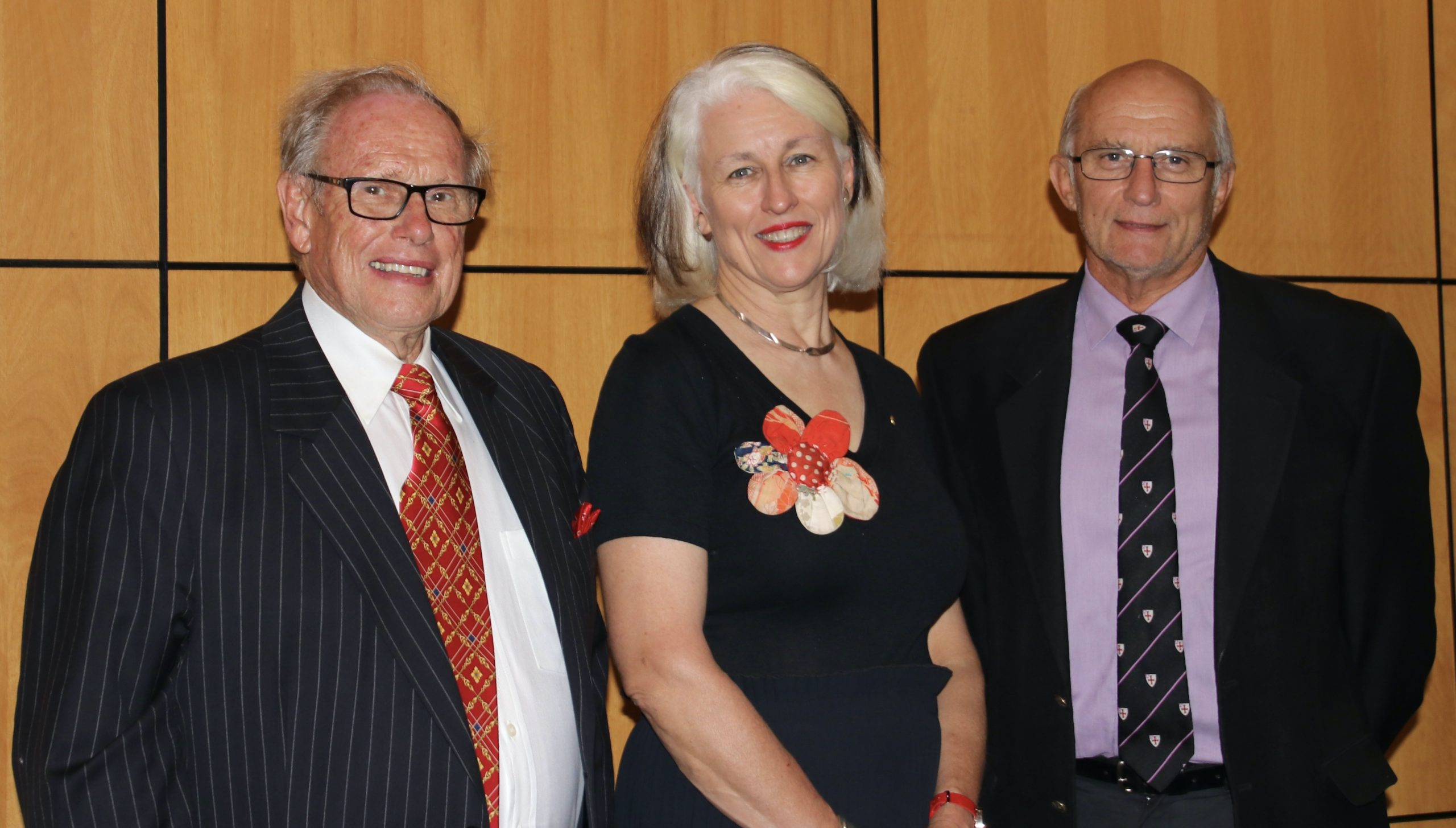
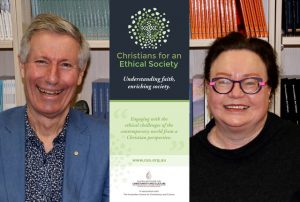
Photo: Alison Weeks (L) and Jo Clay MLA (R)at CES forum 23 November 2022

Christians for an Ethical Society (ces.org.au) is a Canberra-based ecumenical forum which seeks to engage with the ethical challenges of the contemporary world, locally, nationally and internationally.

Author: Katy Nicholls contact 0431 342 857

HOMELESSNESS: The Known and Unknown

By | Past Forums

THURSDAY 6 OCTOBER 7:00PM

There are various ways and means of being homeless or understanding homelessness. Homelessness can be forced upon us by circumstance, understood as a violence inflicted by nature or human intervention. We can also play a significant part in our own homelessness or emotional sense of homelessness. Various forms of homelessness, physical, philosophical and spiritual, can be equally destabilising. A home brings security, sanctuary, belonging and identity – essentials for our peace. A home is essential in the discovery of who we are.

In this theological reflection, Kasy explored practical (immanent or historical) and spiritual (transcendent) notions of homelessness in discerning that a home is a human right as well as a heavenly promise. Ultimately, from a theological perspective, homelessness is an eschatological question of salvation, or human flourishing, ‘on earth as it is in heaven’, understood as two dimensional: in human time and on God’s time.

ABOUT THE SPEAKER

Kasy Chambers
Kasy Chambers is Executive Director of Anglicare’s national body overseeing 35 agencies with almost 30,000 staff with over half a million clients.

A highly capable CEO, Kasy has years of experience in social welfare and housing policy.

Forum Chair: Mr Clive Rodger, Chair, Christians for an Ethical Society

Report on the forum

available here

VIDEO RECORDINGS OF THE FORUM

(total size 341MB)
homelessness-0.mp4
homelessness-1.mp4
homelessness-2.mp4
homelessness-3.mp4

The Meaning of Justice

By | Past Forums

Justice is a very important concept of a principal value that underpins a society that is fair and where the humanity of its members is respected. It is unsurprising, therefore, that it is a concept that has high visibility in the Bible.
There are many categorisations of “Justice”, but a helpful analysis identifies five types: distributive (or economic) justice, procedural justice, retributive justice, restorative justice and environmental justice.
Justice is most commonly connected with the courts, which are often described as the institution which is central to the administration of justice and, accordingly, it is worth looking at them and how they do this, in dispute resolution and especially in sentencing. Richard will explore some of
the issues in this context in which he has worked in various capacities for over the past 45 years.

ABOUT THE SPEAKER

Acting Justice Richard Refshauge
His Honour, Justice Refshauge works in the sentencing of drug and alcohol offenders. He worked in legal practices before becoming the ACT’s 3rd DPP. He took silk in 2000 and was appointed a Supreme Court Judge in 2008 and served in that position for a decade. Richard has held many community positions and holds professorial positions at both ANU and University of Canberra Justice Refshauge has had a long involvement with the church and particularly the Anglican Church where he holds the position of Chancellor. He is very actively involved in both Diocesan and national affairs for the Anglican Church including being Deputy Chair of its Appellate Tribunal.


Forum Chair: Mr Clive Rodger, Chair, Christians for an Ethical Society


TUESDAY 23RD AUGUST 7:00PM

Chapel, Australian Centre for Christianity and Culture, Blackall Street (corner of Kings Ave), Barton ACT
The forum will seek to encourage discussion from the floor. $5 donation would be appreciated. Christians for and Ethical Society is an autonomous mainstream Christian organisation.
Contact: Ann Skamp – secretary@ces.org.au
 

VIDEO RECORDINGS OF THE FORUM

(total size 374MB)
refshauge-0.mp4
refshauge-1.mp4
refshauge-2.mp4
refshauge-3.mp4

May Forum – Christ, Compassion and Context: following the Christ who calls us to live compassionately in our changing context

By | Past Forums

Venerable Tom Henderson-Brooks Anglican Archdeacon – Mission and Chaplaincy spoke at the forum on Wednesday 18 May 2022, 7.00pm at the Chapel, Australian Centre for Christianity & Culture, 15 Blackall St Barton.

Read the report by Katy Nicholls here.

Compassion has long been something that has motivated Tom. It is something that one feels deep within one’s guts. Recognising the divine reality of our deep seated convictions provides not only motivation for responding to human need, but it also creates resilience and courage to enter situations and contexts that were never imaginable in my youth. Tom will take us on a journey of a life of faith.

About the Speaker

Tom has been an Anglican Priest for over 30 years. He cut his teeth ministering for a decade in Kings Cross and embraced addicts, lawyers, sex-workers, traders, inmates, doctors, the homeless and HIV+ people as his congregants and his friends. There he set-up Rough Edges, a volunteer legal centre and advocated against Vanunu’s 18yr solitary sentence. He’s led small to large parishes in Darlinghurst, Bondi, Nowra, Turramurra and Rockhampton; has been an Anglicare Regional Manager and also an Anglicare Board Director in QLD and the ACT. He’s been happily married for over 35 years to Caroline, a linguist who grew up on the west coast in an iron ore town. Before moving to the ACT, Tom was the Administrator (Vicar General) of the Diocese of Central Queensland and he is currently part of the Episcopal Office leadership team overseeing Chaplaincy and Mission across the Anglican Diocese of Canberra-Goulburn.
 

VIDEO RECORDINGS OF THE FORUM

(total size 468MB)
thb-0.mp4
thb-1.mp4
thb-3.mp4
thb-3.mp4
thb-4.mp4

Makarrata, Truth Telling and Justice for First Peoples: Is there a way ahead?

By | Past Forums

This forum was held on Wednesday 16 February 2022 at the Chapel at the Australian Centre for Christianity & Culture.

Makarrata is an ancient word from the language of Yolngu people of Arnhem Land. When the National Aboriginal Conference (NAC) recommended a Treaty of Commitment between Aboriginal Nations and the Australian government in 1979, they selected Makarrata as the indigenous term to represent the process. Far more complex than the term treaty, Makarrata encompasses the processes of conflict resolution, negotiation, peacemaking and justice. In the words of indigenous lawyer, academic and activist Noel Pearson;

“Makarrata captures the idea of two parties coming together after a struggle, healing the divisions of the past. It is about acknowledging that something has been done wrong, and it seeks to make things right.”

Makarrata has become more widely known throughout Australia since the Uluru Statement from the Heart in 2017, which called for a Makarrata commission; “to supervise a process of agreement-making between governments and First Nations and truth-telling.”

Speaker: Professor Asmi Wood, Professor of Law,ANU, College of Law BE LLB (Hons.) PhD ANU; Barrister & Solicitor ACT.

Chair: Mr Clive Rodger, Co-Chair, Christians for an Ethical society.

About the speaker

Asmi Wood’s current research and publication have centred around two main topics; firstly, Constitutional recognition of Indigenous people in Australia and secondly, IndigenousParticipation in Higher Education. The Australian Parliament, both Committees and individuals, Government agencies, community organisations, schools and Indigenous groups have all used Asmi’s research to clarify key issues among staff, invited Asmi to speak at their public events and make contributions to their literature. His research has included policy papers, law reform submissions and articles or chapters in journals and books.

Asmi has presented several keynote addresses to large conferences interested in Indigenous issues including on issues such as ‘recognition’.

Genevieve Jacobs on the role of the media in Australia

By | Past Forums, Uncategorized

Article by Katy Nichols, Christians for an Ethical Society, Board Member

Genevieve Jacobs AM, speaker at Christians for an Ethical Society dinner, with co-chairs Clive Rodger (L) and Stephen Pickard (R)


Media matters never more than now, Genevieve Jacobs AM, Group Editor of Region Media, told the attendees of the Christians for an Ethical Society annual dinner on 15 March 2022. Her talk, which also told us much about her own history and love for what is good, true and beautiful, covered two key issues: why should we care about the media and what should we do about it.

Why should we care about a strong and independent media?

Of greatest relevance to her audience, she stressed the bearing independent news has on our capacity for ethical decisions. Critically, independent media is a vehicle for truth-telling, and all thoughtful people need truth and a variety of voices, as no-one owns all the truth

She invited us to imagine a future without strong media – important court cases would not be reported (for example Mabo, or more recently Bernard Colleary), government budgets would go unchallenged, information on disasters and recovery would be limited, and false news would be promulgated by governments and other sources.

A quick survey of risks to a strong independent media and reasons for the decline in trust in journalism (apart from the commonly known issues of changing platforms and revenue), included evidence of confusion between fact and opinion (many people do not know what an editorial is); and that a better knowledge of the focus of readers (people read politics and sport much less than thought) leads to a temptation to write for click bait.

Truth and information gathering is difficult and costly, and no one funding style one size fits all media. Despite multiple government inquiries into the media, there is only modest funding for independent media: she noted she worried about a future funded by Facebook, Google and government grants.

We were reminded that it was important to have a diversity of voices: the tendency for an echo chamber in social media means that people become used to only hearing one story, and consequently push for exclusion of alternative points of view. President Trump may have made an art form of transforming “news I don’t like” into “false news”, but many people are objecting to voices they don’t like being given an airing – such as the recent objection to an interview with Zachary Rolfe.

What we should do about it?

Ms Jacobs told us that free independent media is driven by the need to tell the truth, but this takes great courage. At its extreme, it can lead to death, and we were reminded of a number of murdered journalists through decades and across the world.

She proudly noted Region Media’s ethical standards, including integrity, independence and responsibility; accuracy; impartiality and diversity of sources; proudly multicultural; and enabling free, fair and robust conversation.

We need to appreciate that independent media is a fundamental function of free society – and the ‘boring’ stuff not covered by social media is often critical to keep the community informed.

We were urged to defend independent and local media strongly, through engaging robustly with it and supporting it. We were urged to appreciate the variety of voices out there and read a wide range, including those we disagree with. Finally, we were encouraged to engage with it intellectually – to think about what the platform is trying to say, and why, not simply to dismiss the report if we disagree.

Christians for an Ethical Society (ces.org.au) is a Canberra-based ecumenical forum which seeks to engage with the ethical challenges of the contemporary world, locally, nationally and internationally.  Our next forum will be on 18 May 2022: Tom Henderson-Brooks on Christ, Compassion + Context – following the Christ who calls us to live compassionately in our changing context.

About the Speaker

Genevieve Jacobs AM is the Group Editor for Region Media, Australia’s fastest growing digital news platform. Genevieve chairs the ACT arts minister’s Creative Advisory Council and co-chairs the ACT Reconciliation Council. She sits on the boards of the Cultural Facilities Corporation, the National Folk Festival and is chair of the Canberra International Music Festival. She is also a director of the Conflict Resolution Service and the Australian Centre for Christianity and Culture. She was made an AM in the Australia Day honours list for her service to public broadcasting and the community. Genevieve has an enduring interest in building community engagement, and is a partner in the family farming enterprise.


“Is it just me,” asked the frog, “or is the water getting warmer?” Watch online

By | Past Forums | No Comments
This forum was held on 9 June 2021 at the Chapel at the Australian Centre for Christianity and Culture

Read “Is it just me,” asked the frog, “or is the water getting warmer?”

“You do not believe anything unless it makes a difference to the way you live your life”. – Bishop Leslie Newbigin. With science ‘settled’, indeed with anecdotal measurements proving more severe than science initially predicted, what is the roll of the community of faith in teaching and action? Yes, there is reason for hope. What is that reason? Science has reasonable grounds for expecting the Church to provide a rationale – or get out of the way. Science gave us a path way out of the pandemic. Science is providing a pathway in face of Global Warming. Faith and science must inform one another. This address contributes to that conversation.

Speaker: Right Reverend Dr George Browning. Respondent: Dr David Hunter. Chair Professor Stephen Pickard.

About the speaker:

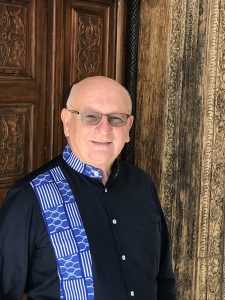
Right Reverend Dr George Browning, PhD, DLitt, is the current convenor of the ACC&C Ambassadors, having the overseen the partnership with Charles Sturt University which established the Centre as well as the founding of St Mark’s National School of Theology. He was Bishop of Canberra and Goulburn from 1993 to 2008 and Inaugural Chair of the Anglican Communion Environment Network from 2001 to 2006.
His doctoral thesis, Sabbath and the Common God: Prospects for a New Humanity, examines the biblical concept of Sabbath as an ethical framework for a response to the challenge of climate change.

In 2000 he was awarded the Centenary medal for his contribution to the community and in 2007 a Doctor of Letters (honoris causa) for his contribution to education.

About the respondent


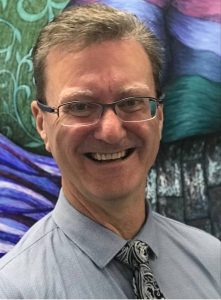
Dr David Hunter, BSc, MSc, PhD, is President of the Orthopterists’ Society, a worldwide organisation of over 300 scientists and practitioners from 60 countries working on locusts, grasshoppers and related insects.

He is also a consultant to the Asian Development Bank as “Climate Adaptive Pest Management Specialist” in the face of climate change, locust attack, and the COVID-19 pandemic.

Read the forum flyer.

Neglect or Ageing with Dignity? Watch online

By | Past Forums

Lin Hatfield-Dodds


This forum was held at the Australian Centre for Christianity & Culture on 23 March 2021.

Caring for the aged in our community has been underfunded and characterised by neglect. Many societies revere their elderly and provide respectful environments for them to age. Gordon Ramsay and Lin Hatfield-Dodds explore the Royal Commissions Report and its recommendations at this Forum and analyse the implications and ethical issues.

Speakers: Gordon Ramsay and Lin Hatfield-Dodds. Chair: Clive Rodgers, CES co-chair.

Read the forum flyer.

Political Propaganda, Freedom of Communication and Truth on Social Media, Watch online

By | Past Forums

Speaker Professor Seumas Miller, Respondent Toni Hassan, Chair Professor Stephen Pickard.

Social media platforms, such as Facebook and Twitter, are used by billions and have enabled the moral right to communication to be exercised on a vast scale. But there has also been an exponential increase in the spread of fake news, hate speech and propaganda, notably from former President Trump, leading to a violent attack by his supporters on the US Congress. A host of difficult practical ethical problems have arisen, e.g. Who is to decide what is fake news and what is fact or what is hate speech or what the limits of religious freedom of communication are – the tech giants themselves?

Held on 10 February, 2021 at 7.30pm at the Chapel at the Australian Centre for Christianity & Culture, 15 Blackall Street, Barton.


Download the forum flyer

Lin Hatfield Dodds Interview: Australia post Covid-19, Listen online

By | Past Forums

On Thursday 25th June Professor John Warhurst President of Christians for an Ethical Society interviewed Lin Hatfield Dodds.

Lin is an Associate Dean of ANZSOG at ANU. She is a former Deputy Secretary of Social Policy in the Department of PM&C, National Director of UnitingCare Australia, President of the Australian Council of Social Service and chair of the Australian Social Inclusions Board.

In the interview John explores with Lin the impact of the pandemic and the type of Australian society she would like to see emerge.

We are hoping this discussion can be continued live in the ACC&C Chapel later in the year.

Listen to the audio recording by clicking the player below.